Spinny Casino Licence, Safety and UK Status
 Available in US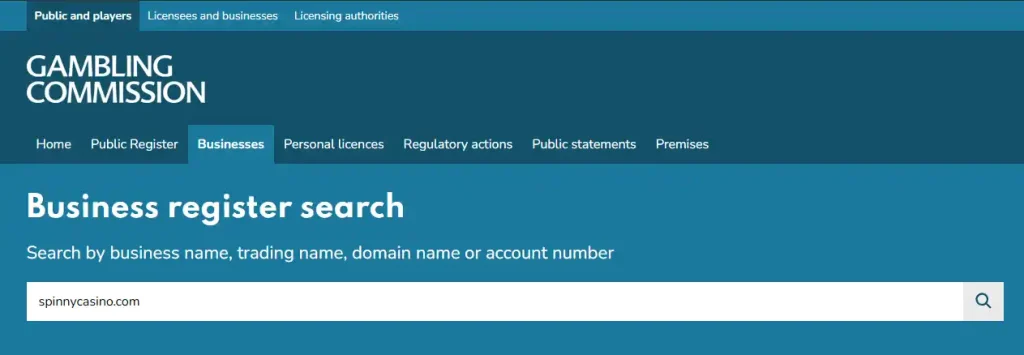
Licence and UK status
Spinny is operated by Green Champions Leader S.R.L. and current sources consistently associate it with Anjouan licence ALSI-202502014-FI1. No UK Gambling Commission licence was verified for Spinny in the checked public-register context. That distinction matters because the UKGC says any remote gambling business serving consumers in Great Britain needs a UKGC licence, including operators based overseas. This page explains the two frameworks without turning the register result into a blanket statement about technical access or every individual player situation.
For the broader product context around licensing and consumer-risk questions, start with the Spinny Casino review; this page stays focused on regulatory status and trust signals.
Table of Contents
- Spinny's licence position in one view
- What the Anjouan licence establishes
- What the UKGC check does and does not establish
- Anjouan regulation and UKGC regulation are different frameworks
- Why GamStop belongs in the framework discussion
- UK tax treatment is a separate question
- Marketing rules are also jurisdiction-specific
- Practical checks before relying on a licence claim
- Where complaints fit into the trust picture
- How to repeat the licence checks yourself
- What UKGC licensing changes in practice
- Why technical access is not the same as regulatory authorisation
- Player protection should be compared by rule, not by label
- What a missing UKGC match means for decision-making
- How to preserve licence evidence if a dispute develops
- Why the operator name matters as much as the casino name
- What Spinny's Anjouan licence means beside UKGC rules
Spinny’s licence position in one view
Spinny is operated by Green Champions Leader S.R.L. and current independent sources consistently associate the casino with an Anjouan gaming licence. A check of the UK Gambling Commission public register did not verify a UKGC licence for Spinny Casino, spinnycasino.com or the named operator.
For a British reader, those are two separate regulatory facts. The UKGC states that a remote gambling business needs its licence to provide gambling facilities to consumers in Great Britain, including an overseas business serving British consumers. An Anjouan licence is therefore not a substitute for UKGC authorisation in Great Britain.
What the Anjouan licence establishes
The Anjouan Gaming Authority maintains a public register of Internet Gaming Licence holders and says that register can be searched by company, licence number or domain. Current third-party sources identify Green Champions Leader S.R.L. as Spinny’s operator and consistently place the brand under the Anjouan regime.
Spinny is operated by Green Champions Leader S.R.L. under Anjouan licence ALSI-202502014-FI1. Anyone relying on that licence identifier for a formal complaint or compliance purpose should confirm its current status and domain coverage in the live regulator entry. Check the operator name, domain and licence identifier together so the record refers to the same casino operation and the same current domain coverage.
What the UKGC check does and does not establish
The UK Gambling Commission regulates commercial gambling in Great Britain. Its current remote-sector guidance states that operators providing remote gambling to consumers in Great Britain need a Commission licence, even when the business is based abroad.
A current register check did not verify a UKGC licence for Spinny. That finding is narrow: it means UKGC authorisation was not established for the brand or operator in that check. It is not the same as saying that every person in the UK will be technically blocked from the website, and it is not a blanket legal judgment about every individual player’s circumstances.
Anjouan regulation and UKGC regulation are different frameworks
Both are licensing frameworks, but they are not interchangeable. For a Great Britain-facing operator, a UKGC licence connects the business to UK-specific licence conditions, compliance supervision and consumer-protection requirements. An Anjouan licence instead places the operator under the rules and supervision of the Anjouan authority.
| Question | Anjouan licence | UKGC licence |
|---|---|---|
| Regulator | Anjouan Gaming Authority | UK Gambling Commission |
| What it shows here | Spinny is associated with an offshore licensing framework | No Spinny licence was verified in the checked UKGC context |
| Relevance to Great Britain | Does not itself establish UKGC authorisation | Required for remote gambling supplied to consumers in Great Britain |
| Player-protection framework | Governed by Anjouan rules | Governed by UKGC licence conditions and British regulatory requirements |
Why GamStop belongs in the framework discussion
GamStop is part of the British self-exclusion environment associated with UK-licensed online gambling. It should be treated as a player-protection mechanism, not as a feature to work around. A casino being outside the verified UKGC register does not create a reason to bypass a self-exclusion decision.
If you have chosen to self-exclude, keep that boundary in place. This guide does not provide instructions for circumventing GamStop, operator blocks or other responsible-gambling controls.
UK tax treatment is a separate question
HM Revenue & Customs guidance says ordinary betting and gambling winnings are generally outside Income Tax: gambling as such does not normally constitute trading, and HMRC’s miscellaneous-income guidance explicitly lists gambling winnings from wagers and bets among receipts that are not taxed under those provisions. This is a UK tax rule about the player, not evidence that a particular casino is UKGC licensed.
Unusual commercial arrangements can be different, so anyone gambling as part of a wider business activity should obtain tax advice rather than treating a general player rule as universal.
Marketing rules are also jurisdiction-specific
UK gambling advertising rules require socially responsible marketing and contain protections for children, young people and vulnerable people. Those rules describe the British advertising environment; they should not be used to imply that Spinny has a UKGC licence or that every promotion shown by an offshore operator has been assessed by the UK regulator.
When reading a promotion, keep the questions separate: what the offer says, what licence the operator holds, and which regulatory framework applies to the player.
Practical checks before relying on a licence claim
Use the regulator’s own public register rather than a casino logo or an affiliate badge. Search the operator name, licence number and domain where the register supports those fields. Check that the status is current and that the domain you are using is actually associated with the holder.
For Spinny, also compare the operator name shown in the live terms with Green Champions Leader S.R.L. If the operator, domain or licence information changes, treat the new live information as a reason to repeat the register check before depositing or submitting sensitive KYC material.
Where complaints fit into the trust picture
A licence answers a regulatory-status question; it does not tell you how every withdrawal or support dispute is handled. Player complaints are a separate evidence stream. Our Spinny Casino complaints looks at reported disputes and the clauses that can matter when a payout is contested.
Payments are separate again. If your concern is cashier access, method choice or currency handling, use the Spinny Casino payment methods. If you are deciding whether to create an account, the Spinny Casino registration explains what can be verified about account setup. Current promotions are covered separately on the Spinny bonus terms.
How to repeat the licence checks yourself
Start with the legal entity rather than the brand name alone. Search the UK Gambling Commission public register for Spinny Casino, spinnycasino.com and Green Champions Leader S.R.L. A brand can trade under a company name that is not obvious from the homepage, so checking all three reduces the chance of missing a differently presented entry.
Then use the Anjouan Gaming Authority public register. Its verification tool is designed to accept a company name, licence number or operational domain and to return the registered holder, licence type and current status. If the casino footer and the regulator entry disagree, treat the regulator record as the stronger evidence and do not rely on a copied licence badge.
Register checks are time-sensitive. A result recorded in an old review can become stale if a licence expires, is suspended, changes holder or has domains added or removed. Repeating the search immediately before a large deposit, complaint or KYC submission gives you a cleaner evidence trail.
What UKGC licensing changes in practice
A UKGC licence is more than a logo. It brings an operator serving Great Britain within the Commission’s licensing framework, including licence conditions, technical standards and player-protection obligations. That framework also gives British consumers a regulator whose rules are written specifically for the GB market.
This does not mean every UKGC-licensed casino provides a perfect customer experience, and it does not mean an offshore licence has no regulatory meaning. The practical point is jurisdiction: if you are a consumer in Great Britain, the UKGC framework is the one designed to regulate remote gambling supplied to you. An Anjouan licence answers a different question – whether the operator is licensed under Anjouan’s regime.
That difference also affects how you should interpret compliance claims. A statement that Spinny is “licensed” can be factually meaningful if it refers to Anjouan, but it should not be shortened into wording that implies UKGC authorisation. The jurisdiction belongs next to the licensing claim.
Why technical access is not the same as regulatory authorisation
A website loading in a browser does not prove that the operator holds the licence required for the reader’s jurisdiction. Conversely, a temporary access failure does not prove that players in a named country are generally prohibited. Access and licensing are distinct evidence categories.
For Spinny, the relevant UK question is therefore the register and the UKGC’s own remote-gambling rule, not whether a particular device can open the homepage on a particular day. Keeping those questions separate prevents a common error in casino reviews: turning a technical observation into a legal conclusion.
Player protection should be compared by rule, not by label
When comparing regulatory frameworks, focus on concrete protections instead of assuming that every licence produces the same safeguards. For Great Britain, the UKGC publishes rules and guidance for remote operators, while Anjouan publishes its own licensing and supervision framework. Those systems should be evaluated on their actual requirements and complaint routes rather than treated as interchangeable because both use the word “licence”.
For a player, practical questions include who supervises the operator, which regulator can receive relevant complaints, what self-exclusion environment applies, what identity and affordability rules apply, and whether the domain being used is covered by the licence record. These are narrower and more useful questions than asking whether a licence alone proves that a casino is “safe”.
What a missing UKGC match means for decision-making
The absence of a verified UKGC match is important because the Commission explicitly requires a licence for remote gambling supplied to consumers in Great Britain. It means a UK reader should not assume that British regulatory protections apply to Spinny merely because the site is available in English, accepts familiar payment methods or discusses UK-relevant topics.
It still does not answer every other question about the casino. Game availability, payment processing, KYC, bonus rules and complaint handling each require their own evidence. This site keeps those facts isolated so the licensing result does not automatically contaminate or inflate claims about unrelated features.
How to preserve licence evidence if a dispute develops
If licensing becomes relevant to a complaint, capture the regulator result with the date, search term and visible status. Save the casino terms page that identifies the operator, and note the exact domain you used. If the operator later changes its footer or licence statement, those dated records help show what information was presented when the transaction occurred.
Do the same with any complaint correspondence. Regulatory status and the merits of an individual payment dispute are different issues, but a clean record makes it easier to explain both without relying on memory or an undated affiliate review.
Why the operator name matters as much as the casino name
Regulatory registers often identify the legal operator rather than the marketing brand that appears on a casino homepage. That makes Green Champions Leader S.R.L. an important search term alongside Spinny Casino and the domain itself. A review that searches only the brand name can miss a legitimate register entry, while a review that searches only a company name can miss whether the specific domain is actually covered.
For the same reason, a change in operator should trigger a fresh check. If the live terms start naming a different company, an older licence statement should not simply be carried forward. The company, domain and regulator record need to line up at the time the claim is published.
Repeat the register check periodically, especially if the operator name, domain or licence information changes.
What Spinny’s Anjouan licence means beside UKGC rules
The useful conclusion is not a single label such as “safe” or “unsafe”. The evidence is more specific: Spinny is operated by Green Champions Leader S.R.L. and is consistently associated with an Anjouan licence, while a current UK Gambling Commission register check did not verify a licence for the brand. The UKGC states that remote operators serving consumers in Great Britain need its licence.
For a UK reader, that difference affects which regulatory framework can be relied upon. Check both the Anjouan register and the UKGC register directly, keep licensing separate from bonus or payment claims, and use the complaint record as a different line of evidence about how disputes have been reported and handled. Keep those evidence streams separate when making a decision.